
When the jaw lacks enough bone for implants, bone grafting can rebuild it. Learn how grafting works, the main techniques, and what recovery looks like for NYC patients.
Bone Grafting, Explained
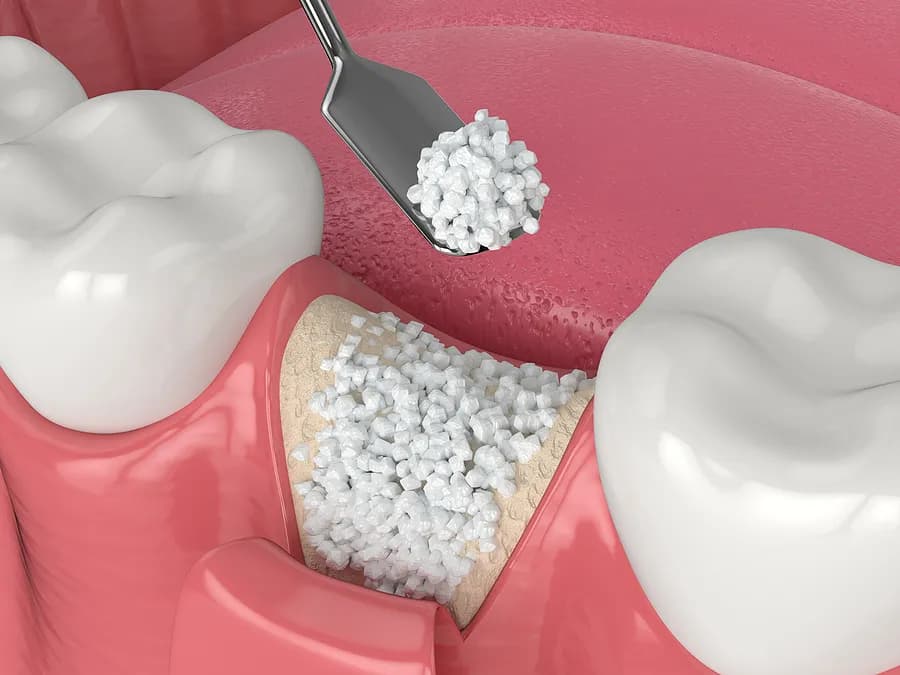
Bone grafting is a surgical technique for rebuilding areas of the jaw where bone has thinned or worn away. During the procedure, bone material is placed into spots that lack the volume needed for good oral health, a deficit usually caused by missing teeth, gum disease, or an injury. It comes up most often in implant dentistry: a dental implant can only fuse properly when the jawbone beneath it is dense and healthy.
Grafting material can come from several sources. An autograft uses bone from elsewhere in your own body, an allograft comes from a human donor, a xenograft is derived from animal bone, and synthetic grafts are lab-made materials engineered to behave like natural bone. Your surgeon chooses the source that fits your case.
Why Healthy Jawbone Matters
After a tooth is lost, the bone that once supported it begins to shrink. This happens through resorption: without a root delivering chewing forces, the body stops maintaining that section of bone, and it gradually weakens and recedes. Once too much volume disappears, placing an implant becomes difficult because there is nothing solid for the post to anchor into.
Grafting reverses this problem by rebuilding the missing tissue and returning strength to the jaw. It also fills in defects left behind by extractions, trauma, or infection, which makes implant treatment more predictable and longer-lasting.
The Main Grafting Techniques
Socket Preservation: Done right after an extraction, this technique packs graft material into the empty socket so the bone there does not collapse, keeping the site ready for a future implant.
Sinus Lift: When the upper jaw near the back teeth is too shallow, the surgeon gently raises the sinus membrane and adds graft material beneath it, building enough vertical bone for implants to succeed.
Ridge Augmentation: When gum disease or missing teeth have narrowed or flattened the jaw ridge, graft material is layered along it to restore both width and height, creating a sturdy platform for implants.
Block Grafting: For larger defects, a small block of bone is taken from another site (often the chin or the back of the jaw), fixed in place with tiny screws, and allowed to fuse with the surrounding bone over time.
What the Procedure Looks Like
Everything starts with a detailed consultation: an exam of your teeth and gums, a review of your health history, and digital X-rays or 3D imaging to measure exactly how much bone is missing and which graft approach fits.
On surgery day, local anesthetic or sedation keeps you comfortable. If your own bone is being used, the donor area is numbed and a small amount is collected through a minor incision. The graft is then placed at the target site and the gums are stitched closed. Over the following months the graft knits together with your natural bone, and your dentist checks the progress at follow-up visits.
Recovery and Aftercare
Expect some swelling, bruising, and soreness for a few days; over-the-counter pain relievers and careful home care usually handle it well. Protecting the grafted spot from pressure is the single most important rule while it heals.
Plan on soft foods for a few weeks so the site is not strained, and take any prescribed antibiotics to keep infection away. Your dentist will walk you through how to keep the area clean. Once the graft has fully matured, you can move on to the next stage of treatment, often implant placement.
What Grafting Does for You
- Better Implant Outcomes: A rebuilt, solid jaw gives implants the anchor they need to integrate and last
- Rebuilt Bone Volume: Grafting replaces what resorption took away and stops ongoing deterioration
- A More Youthful Look: Restoring bone supports the cheeks and lips, avoiding the hollow look that follows bone loss
- Stronger Everyday Function: With a reconstructed jaw, chewing and speaking feel stable and comfortable again