
Dental fear keeps millions of people away from care they need. Sedation dentistry offers a proven path back to the chair, with options for every anxiety level.
For some people, just thinking about a dental appointment triggers real fear. This condition, called dental anxiety (or in severe cases, dental phobia or odontophobia), spans everything from mild jitters to full-blown panic. The triggers vary: for some it is the whine of the drill, for others the clinical smell of the office, and for many it traces back to a bad experience years ago.
Research suggests dental anxiety touches as much as 15 percent of the global population. That translates to millions of people postponing or skipping oral care their health genuinely depends on.
Why Sedation Dentistry Has Taken Off
Sedation dentistry has become an increasingly popular answer for anxious patients and for anyone who struggles to sit still through longer procedures. Depending on the approach, medication keeps you calm while you stay awake, or lets you sleep through the appointment entirely.
The impact is twofold. Patients who spent years avoiding the dentist can finally get the treatment they need without dread taking over. And because a relaxed patient is an easier patient to treat, dentists can accomplish more in each visit, often condensing what would have been several stressful appointments into one calm session.
The Four Levels of Sedation
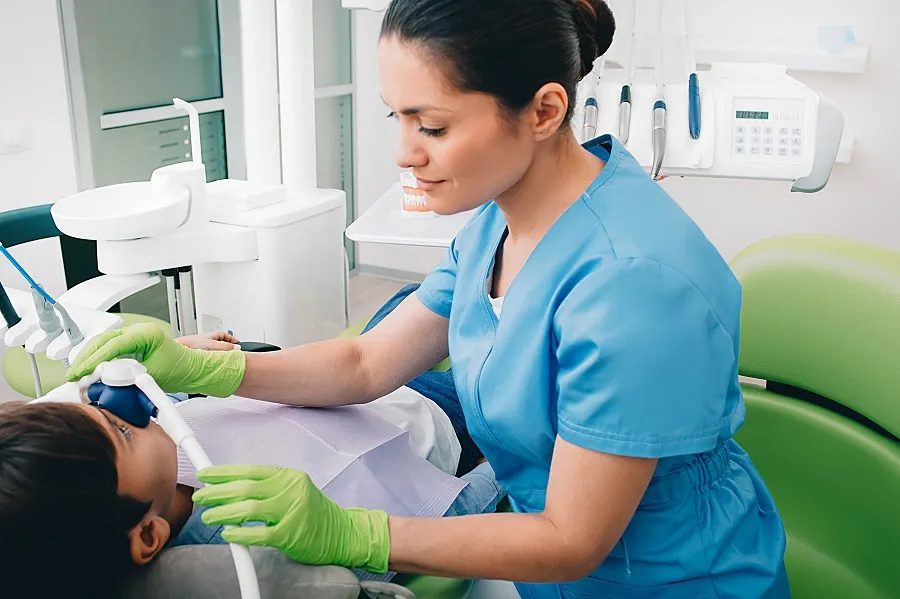
Nitrous Oxide: The gentlest option, familiar to many as laughing gas. Breathed through a small nose mask, it melts tension away while you stay fully alert and able to respond.
Oral Sedation: A prescribed pill taken before your appointment. Dosing scales from light to moderate depending on how anxious you tend to get.
IV Sedation: Delivered straight into the bloodstream, this option suits longer procedures and more intense anxiety, producing profound calm or light sleep for the duration.
General Anesthesia: The deepest level, used only for major or lengthy surgical work. You are completely unconscious, with no awareness or memory of the treatment.
Choosing among these comes down to your anxiety level and your medical history. Your dentist will review both and match you with the option that keeps you safest and most comfortable.